 | |
The Unraveling: Trump's Economic Promises Meet Political Reality
By Leon Hadar
For nearly a decade, Donald Trump has demonstrated an almost supernatural ability to defy political gravity. Scandals that would sink other politicians barely dented his armor. Legal challenges strengthened rather than weakened his base. Internal party revolts dissolved before his force of personality. But as 2026 unfolds, a fundamentally different dynamic appears to be taking hold, one where Trump's signature promises collide with stubborn economic realities, and where the very voters who delivered his historic comeback now question whether he can deliver on his commitments.
The Economic Reckoning
Trump secured his 2024 victory largely on the strength of voter confidence in his economic management. Americans, frustrated by inflation and rising costs under the Biden administration, believed Trump would restore prosperity and affordability. Yet just over a year into his second term, that confidence has evaporated with startling speed. His approval rating on economic issues has plummeted to 39%, with 61% of voters now disapproving of his economic performance—one of his worst showings since returning to office.
The source of this erosion is clear: Americans are experiencing economic pain in their daily lives. Households face between $1,300 and $2,100 in additional annual costs due to the combined effects of tariffs, deregulation, and persistent inflationary pressures. Unemployment has climbed to 4.6%, signaling a cooling labor market after years of post-pandemic expansion. Consumer sentiment continues to darken as families struggle with the cost of basic necessities.
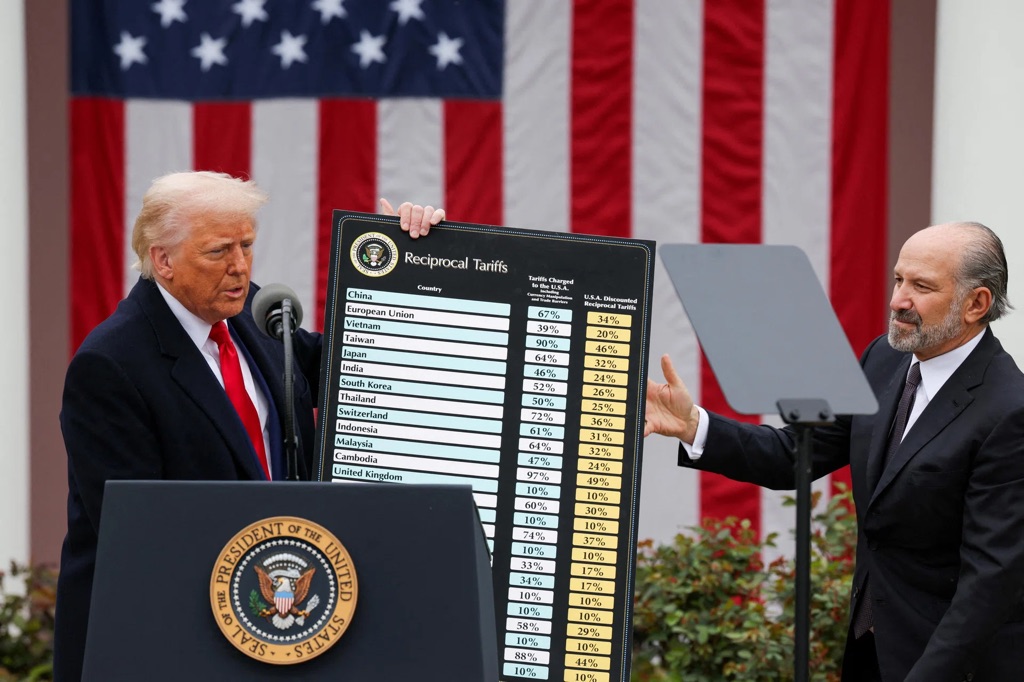
Most damaging to Trump's political standing is the public's assessment of tariffs, his signature economic policy. A staggering 75% of Americans—including 56% of Republicans—believe tariffs are raising prices rather than protecting American workers. This represents a devastating repudiation of Trump's core economic philosophy. When only 14% of Americans support imposing additional tariffs, the political foundation for Trump's trade war has essentially collapsed.
Trump's effort to deflect blame has fallen flat. Only 22% of Americans blame Joe Biden for current economic conditions, while 47% hold the current president responsible. Even more troubling for Trump, 61% of voters say that when he discusses the economy, he makes the situation sound better than it actually is, a perception that undermines his credibility on his strongest issue.
The public's verdict on specific Trump policies is equally harsh. Only 29% believe his policies have helped create jobs, compared to 50% who think they've contributed to job losses. Sixty-one percent believe his policies have raised health insurance premiums. His tariff-driven manufacturing strategy has reduced employment by 2.7% in targeted sectors, with automation and retaliatory trade measures accelerating job losses in the very communities Trump promised to revitalize.
The Political Consequences
These economic disappointments are translating directly into political vulnerability. Trump's overall approval rating has sunk to approximately 36%, with a net approval rating of 24%, a historic low surpassed only by Richard Nixon at a comparable point in his presidency. More ominously for Republicans, the party's advantage on economic management has disappeared. Democrats now lead Republicans 40% to 35% on handling the economy, with an 11-point advantage among independents and a 15-point lead among Hispanic voters—a demographic Trump made significant inroads with in 2024.
The 2026 midterm elections loom as a potential disaster for congressional Republicans who marched in lockstep with Trump throughout 2025. Democrats currently enjoy a 4.5-point advantage in general congressional polling. With Trump's approval underwater and Republicans tied to his unpopular policies, the party's slim majorities in both chambers appear increasingly vulnerable.
Recent state election results have heightened alarm among Republicans. The structural supports of Trumpism—economic optimism, party unity, and an aura of political invincibility—are weakening simultaneously for the first time. Even longtime Republican strategists acknowledge that this represents a fundamentally different challenge than previous controversies Trump has weathered.
The Populist Pivot
Facing these dire political indicators, Trump has executed a remarkable ideological pivot. In recent weeks, he has proposed capping credit card interest rates at 10% for one year, barring large private equity funds from purchasing residential housing, and prohibiting defense contractors from issuing dividends or stock buybacks. These proposals read like a progressive wishlist and represent a sharp departure from traditional Republican orthodoxy.
The inspiration for these moves is transparent: Trump posted his credit card interest cap proposal just hours after Senator Bernie Sanders tweeted about the same issue. His housing proposal mirrors a plan championed by Kamala Harris during the 2024 campaign. Trump even reached out to Senator Elizabeth Warren after she delivered a speech arguing that Democrats could win by choosing "everybody else" over making "the rich richer."
This populist turn has unsettled many Republicans. Some view it as pragmatic adaptation to political necessity, while others see it as a desperate attempt to change the subject from Trump's actual record. One House Republican, speaking anonymously, dismissed the proposals as "hiding from your record."
The White House defends the shift as fulfilling Trump's mandate to challenge Washington orthodoxy. But the fundamental question remains whether these proposals—many of which would require congressional approval that may not materialize—can reverse the erosion of public confidence. Trump needs to convince voters that economic conditions will improve quickly, but his previous promises on this front have already been broken.
Broader Implications
Beyond immediate political calculations, Trump's struggles reflect deeper structural challenges. His first-year policies have created what economists describe as government-induced uncertainty on a scale not seen in a century. Businesses and consumers delay investment and spending decisions when trade policies, immigration enforcement, and regulatory frameworks shift unpredictably. This uncertainty acts as a drag on economic growth even when headline GDP figures appear robust.
The concentration of corporate power continues accelerating under Trump's watch, with well-capitalized companies using tax relief and high interest rates to absorb struggling competitors. This consolidation reduces competition, suppresses wages despite record profits, and leaves workers with diminished bargaining power. The resulting "K-shaped" economic split—where the wealthy thrive while working and middle-class families struggle—fuels the populist discontent Trump claims to champion but his policies have actually intensified.
Looking ahead, economic expectations remain grim. Only one-third of Americans believe their family finances will improve this year, down from 48% last June. Twenty-three percent think the economy is improving, while 53% believe it's getting worse. These sentiments create a political environment where incumbents typically suffer significant losses.
Whether this moment represents the beginning of Trump's political decline remains uncertain. He has defied predictions of his demise many times before. But the convergence of economic disappointment, political vulnerability, and eroding base support differs qualitatively from previous challenges. Trump won the presidency by promising to make life more affordable for ordinary Americans. As those same Americans face higher costs, job insecurity, and diminished economic prospects, the gap between promise and reality has become impossible to ignore.
Trump's populist pivot may represent genuine recalibration or merely tactical positioning. Either way, it acknowledges what the data makes clear: his economic record is becoming his political liability. The question for 2026 is whether any policy shift can overcome the accumulated weight of broken promises and lived experience. For a politician who built his brand on winning, these are the stakes of a potentially defining moment, and the outcome may finally exceed even Trump's considerable powers of political survival.